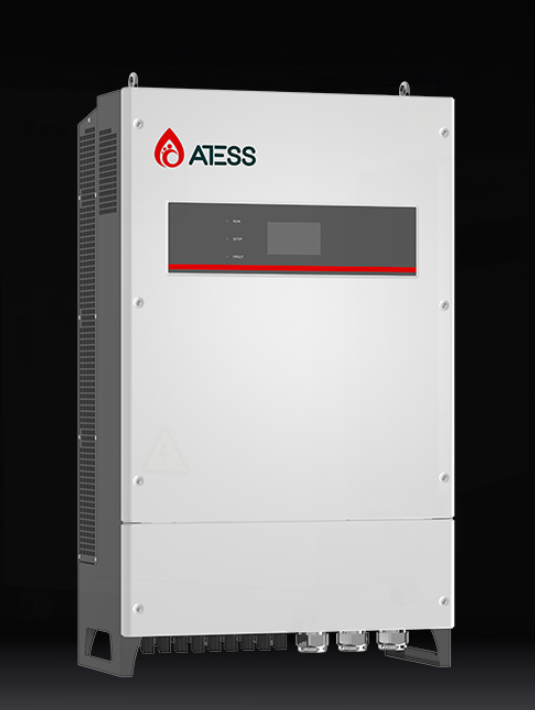
When too many solar panels are connected to an inverter, the system may operate outside its intended range, leading to efficiency losses or unexpected shutdowns. In some cases, excess input power can trigger protective mechanisms, causing the inverter to limit production during peak sunlight hours. This topic often arises among distributors exploring system planning, particularly when evaluating whether a 30kw inverter can handle additional array capacity. They also consider how brands like Atess design their products to maintain stability under changing conditions. Oversizing without proper calculation may result in reduced output rather than higher energy yield.
Impact on System Performance and Safety
Excessive DC input may increase thermal stress, shortening component lifespan or causing derating during high-temperature periods. Installers often assess how an atess 50kw inverter responds to fluctuating loads, since performance varies depending on site conditions and panel configuration. In systems where sensitive equipment is involved, improper sizing may cause power quality fluctuations or reduced backup capability. They emphasize that hybrid inverters designed for mixed load scenarios require balanced DC-to-AC ratios to maintain reliable operation. Understanding these factors helps distributors and EPC teams avoid mismatches that compromise long-term performance.
Matching Proper Inverter Capacity
Choosing equipment that supports appropriate PV input ensures stable output and predictable operation. For small and medium businesses, a 30kw inverter within the HPS30000TL hybrid series can manage daily consumption while protecting the system from over-input stress. They also offer the HPS40000TL and HPS50000TL models, allowing factories with larger loads to apply an atess 50kw inverter for steady production during irregular grid conditions. These hybrid inverters support rapid transitions between on-grid and off-grid modes, helping maintain operations even when solar input fluctuates.
Conclusion
Oversizing solar panels beyond an inverter’s recommended capacity generally leads to lost energy, reduced efficiency, or unnecessary stress on system components. Following proper design guidelines ensures long-term reliability, especially when hybrid models from Atess are selected for commercial and industrial scenarios. Whether configuring a 30kw inverter or planning around an atess 50kw inverter, accurate sizing remains essential for safe and consistent solar performance.
