Power conversion has become more demanding as industrial equipment, electric vehicles, communication infrastructure, and renewable energy systems continue to evolve. Every stage of power conversion relies on magnetic components that help transfer energy, isolate circuits, and maintain stable electrical performance.
Modern electronic systems require components with suitable electrical characteristics, compact structures, and consistent quality. Engineers need to evaluate factors such as power capacity, operating conditions, and design compatibility before selecting components for different applications.
Choosing a qualified transformer manufacturer is therefore not only about sourcing a component but also about ensuring compatibility with the final application, manufacturing process, and reliability requirements. A professional supplier can provide technical support and customized solutions based on project specifications.
This approach helps businesses build stable power systems while reducing potential design challenges during development and production. Careful selection of magnetic components can improve overall system integration and support long-term application needs.
Why Magnetic Design Matters in Modern Electronic Systems
Electronic transformers perform different functions depending on the application. Some provide electrical isolation between primary and secondary circuits, while others support voltage conversion or energy transfer in switching power supplies. Their electrical characteristics directly influence efficiency, thermal behavior, electromagnetic compatibility, and long-term operating stability.
Design engineers typically evaluate core materials, winding structures, insulation systems, and mounting methods before selecting a transformer. Small design changes may affect switching frequency, leakage inductance, temperature rise, or electromagnetic interference, making early engineering collaboration valuable during product development.
Because application requirements vary widely, a transformer manufacturer often develops customized magnetic solutions instead of relying only on standard catalog products. This approach helps match electrical performance with specific operating environments and system architectures.
How Different Industries Require Different Transformer Designs
Industrial power modules usually require high-frequency electronic transformers, planar transformers, PFC inductors, and common-mode or differential-mode inductors. These components support compact circuit layouts while helping power supplies maintain stable operation under changing electrical loads.
The automotive sector places additional emphasis on environmental durability and qualification standards. Vehicle power electronics frequently use OBC transformers, DC-DC transformers, drive transformers, BMS transformers, and filter inductors. Components designed for these applications must operate across wide temperature ranges while meeting automotive reliability requirements.
Renewable energy systems introduce another set of challenges. Solar, energy storage, and charging equipment commonly integrate common-mode inductors, differential-mode inductors, micro-inverter transformers, and high-power DC-DC transformers. These products help improve power conversion performance while supporting different system architectures.
Product Example: Understanding the TTAEFD14-1779SG
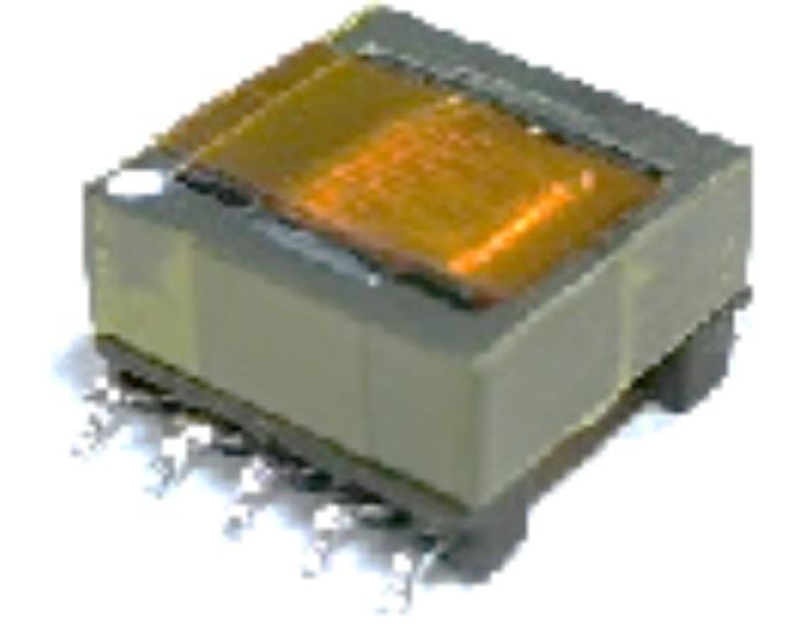
A practical example is Item Number TTAEFD14-1779SG, which uses an EFD14 core structure designed for SMT assembly. The compact dimensions of 17.5 mm × 14.0 mm × 8.0 mm make it suitable for applications where PCB space is carefully managed without sacrificing functional performance.
The component provides an inductance of 15 ±12.5% μH and features a 2700V AC insulation rating together with a 3 mm safety distance. These specifications are selected to support electrical isolation requirements commonly found in switching power supply designs.
For demanding operating environments, the component is qualified to AEC-Q200 Grade 1 and supports an operating temperature range from -40℃ to 125℃. Such characteristics make it appropriate for electronic systems that require stable performance across varying environmental conditions.
Manufacturing Capability Beyond Standard Products
Many electronic equipment manufacturers require magnetic components tailored to their own circuit topology instead of off-the-shelf designs. In these situations, engineering capability becomes as important as production capacity because electrical parameters, mechanical dimensions, and thermal performance all need to fit the final product.
As a transformer manufacturer, suppliers may provide customized development covering high-frequency transformers, planar transformers, molded power inductors, common-mode inductors, differential-mode inductors, and application-specific magnetic components for industrial and energy systems.
Beyond electrical performance, manufacturing consistency also plays an important role. Stable winding processes, material control, dimensional inspection, and production testing help reduce variation between production batches, supporting long-term product reliability for OEM and ODM customers.
The Expanding Role of Magnetic Components in Communication Equipment
Communication equipment continues moving toward higher transmission speeds and more compact hardware layouts. This evolution places increasing demands on network magnetic components that support signal integrity and electrical isolation within networking devices.
Besides traditional LAN transformers, newer chip LAN transformers provide additional flexibility for compact equipment. Compatibility with conventional network transformer applications allows equipment manufacturers to adopt different packaging solutions while maintaining required electrical functions.
Mentech develops customized magnetic components for communication, industrial power supplies, automotive electronics, and renewable energy applications. Their product portfolio includes high-frequency electronic transformers, PFC inductors, planar transformers, molded power inductors, automotive-grade transformers, common-mode inductors, differential-mode inductors, micro-inverter transformers, and network transformers to address different B2B project requirements.
Conclusion
Selecting a reliable transformer manufacturer involves evaluating engineering capability, application knowledge, production consistency, and the ability to customize magnetic components for different industries. As electronic systems continue becoming more compact and more demanding, magnetic component design remains an important factor influencing system stability and long-term performance.
Within this market, Mentech provides customized magnetic component development covering industrial power modules, new energy vehicles, renewable energy systems, and communication equipment. Their portfolio also includes products such as the TTAEFD14-1779SG, giving OEM customers additional options when matching magnetic components to specific application requirements.
