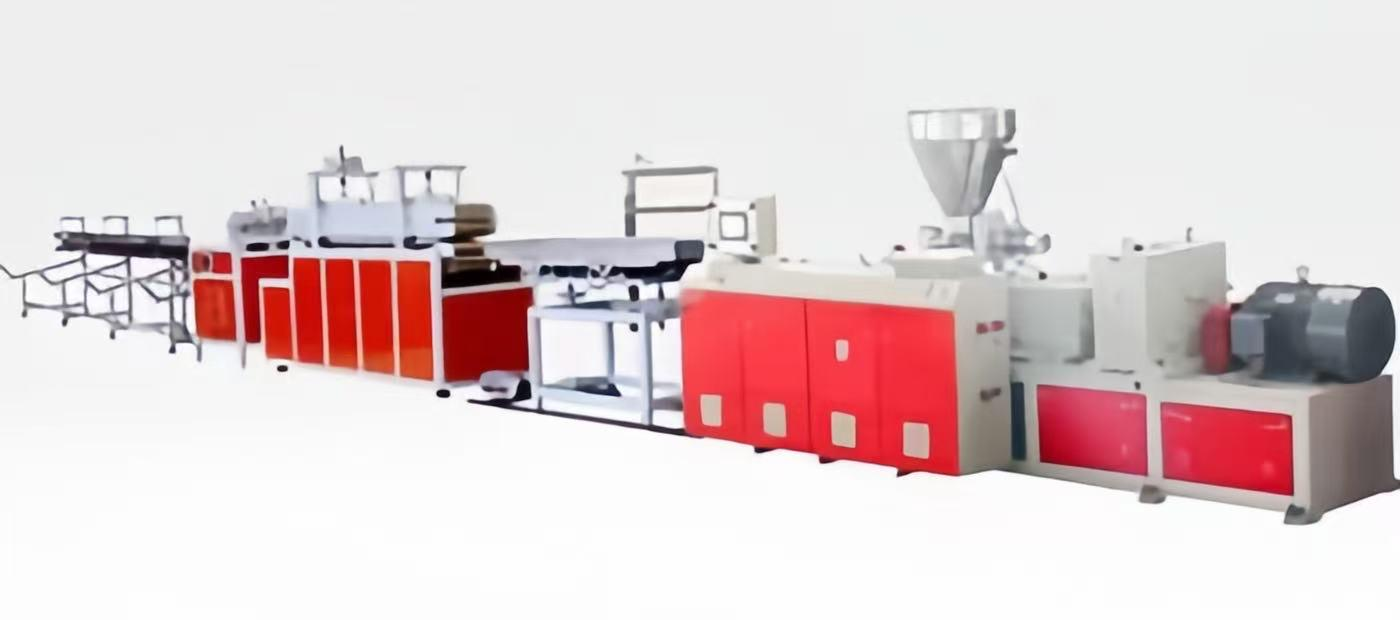
In PVC profile extrusion, temperature settings directly influence how smoothly the material moves through the machine. Among different heating zones, die temperature is especially important because it affects the final forming stage before the profile enters calibration and cooling.
A pvc profile production line usually includes extrusion, die forming, calibration, cooling, and cutting sections. If the die temperature is not properly adjusted, manufacturers may experience unstable extrusion pressure, uneven profile dimensions, surface defects, or frequent production adjustments.
For factory operators, controlling die temperature is not only about maintaining a preset value. It requires balancing material characteristics, production speed, profile structure, and downstream cooling conditions.
The Relationship Between Die Temperature and Material Flow
During PVC extrusion, the material is heated and plasticized inside the barrel before entering the die. The die controls the final shape of the profile, so the material must flow through the die opening evenly.
When the die temperature is too low, PVC melt flow resistance increases. The extrusion pressure may rise, making it more difficult for the material to pass through the die smoothly. In actual production, this may appear as unstable output speed, rough profile surfaces, or inconsistent dimensions between different production batches.
If the die temperature is too high, the material may become excessively soft during forming. This can affect the profile’s shape retention after leaving the die and increase the adjustment requirements of the cooling and calibration sections.
For this reason, operators usually adjust die temperature together with screw speed, extrusion pressure, and cooling parameters rather than treating it as an independent setting.
Impact of Die Temperature on PVC Profile Extrusion Output
Production output is closely related to extrusion stability. A stable die temperature allows the machine to maintain continuous material flow and operate at the designed production speed.
For a pvc profile extrusion machine, temperature fluctuations in the die section can influence both output quantity and production consistency. For example, when the die temperature changes during long-running production, operators may need to reduce speed or stop the line for adjustments to avoid producing defective profiles.
Another practical issue is startup adjustment. When changing materials, profile designs, or production conditions, manufacturers often need to fine-tune die temperature to achieve the correct balance between extrusion pressure and profile appearance. Faster stabilization during startup can help reduce material waste.
Stable die temperature also supports continuous production. In large-volume PVC profile manufacturing, even small fluctuations can accumulate into significant material losses over long operating periods.
Die Temperature Control and Profile Quality Requirements
PVC profiles are commonly used for window frames, door systems, decorative components, and construction applications. These products often require accurate dimensions and consistent surface quality.
Incorrect die temperature may affect several quality factors. Uneven temperature distribution inside the die can cause different flow speeds across the profile width, resulting in deformation or dimensional differences.
Surface quality is another important consideration. If the temperature is too low, profiles may show rough surfaces or poor finishing effects. If the temperature is too high, excessive material softness may influence the profile’s final shape after cooling.
In practical production, die temperature be synchronized with downstream calibration and cooling. The profile leaving the die is still at a high temperature, and proper cooling is required to maintain its designed dimensions. Therefore, temperature adjustment is usually based on the complete extrusion process rather than one single machine section.
Improving Die Temperature Management Through Equipment Design
Accurate temperature control depends not only on operator experience but also on equipment design. A well-designed extrusion system should provide stable heating, cooling, and automatic adjustment capabilities.
Modern extrusion equipment often uses PLC control systems to monitor temperature zones and operating parameters. This allows operators to identify changes quickly and make adjustments during production.
Equipment suppliers with extrusion engineering experience can also help manufacturers select suitable configurations according to profile size, material formulation, and output requirements.
Boyu has more than 20 years of experience in plastic extrusion equipment manufacturing and provides customized solutions for PVC profiles, SPC flooring, and other extrusion applications. The company focuses on extrusion technology development, automated control systems, and production support for different manufacturing needs.
Choosing the Right Equipment for Stable PVC Profile Production
Die temperature control is an important factor in maintaining stable PVC profile output, but it needs to work together with extrusion design, cooling systems, and production management.
Manufacturers should evaluate equipment structure, temperature control capability, maintenance requirements, and technical support when selecting extrusion solutions. Proper equipment configuration can help reduce production adjustments and improve consistency during daily operation.
A suitable pvc profile production line can help factories achieve more stable output and consistent PVC profile quality.With professional extrusion experience and customized solutions, Boyu supports manufacturers in building reliable production processes.
