Introduction: Why US Venue Teams Compare LED Video Wall Rental and Projection
Choosing between an indoor led video wall rental and projection affects more than the screen. US venue teams must manage lighting, sightlines, budget, rigging, labor, camera image quality, and show reliability.
LED often helps in bright rooms and camera-heavy productions. Projection can still fit controlled-light venues, simpler meetings, and budget-sensitive rooms. Use the factors below to compare options for ballrooms, conference centers, theaters, houses of worship, trade shows, and corporate event spaces. LED manufacturers such as YES TECH become relevant once the venue conditions point toward modular LED.
Quick-Scan Summary: The 5 Rental vs Projection Factors
|
Factor |
Planning question |
When LED rental tends to fit |
When projection may fit |
Evidence to request |
Main buyer check |
|
#1 Ambient Light and Room Brightness |
Will the room stay bright? |
House lights, daylight spill, camera exposure |
Dark or moderate-light rooms |
Lighting plan, brightness guidance |
Request a site-aware quote |
|
#2 LED Panel Specification and Modular Fit |
Does the hardware fit the room? |
Modular staging, close viewers, custom sizes |
Standard screen shape works |
Panel spec sheet, cabinet plan |
Compare MG10 or equivalent panels |
|
#3 Viewing Distance, Pixel Pitch, and Screen Size |
Can all seats read content? |
Close seats need suitable pitch |
Large image in controlled light |
Seating chart, pitch, resolution |
Match screen to content detail |
|
#4 Rental Scope, Labor, and Venue Logistics |
What is actually included? |
Fully installed, operated package |
Simpler screen and projector scope |
Itemized quote, labor plan |
Compare equal assumptions |
|
#5 Content, Cameras, and Show Risk |
Will it look right live and on camera? |
IMAG, livestream, sponsor visuals |
Slide-only meetings in dark rooms |
Run-of-show, signal path |
Test content before doors |
How We Evaluated Indoor Display Choices for US Venues
The ranking prioritizes five criteria: venue lighting, audience distance, rental scope, installation constraints, and content workflow. We compared published specifications, rental-scope descriptions, and venue-planning guidance rather than assuming one technology always wins.
Lighting includes house lights, daylight spill, stage fixtures, dimming, and screen placement. Projection depends on reflected light, while LED is self-emissive, so a lighting plan and site check are essential.
Audience distance covers closest seats, back rows, slide text, IMAG, pixel pitch, projector resolution, and screen dimensions. Rental completeness includes panels, processors, screens, lenses, cabling, power distribution, rigging, delivery, operator coverage, and strike.
Installation feasibility depends on rigging points, ground support, ceiling height, load-in paths, dock access, union rules, power, and venue insurance. Camera and content workflow adds refresh rate, processor compatibility, aspect ratio, playback formats, live switching, and rehearsal time.
The Ranked List: Top 5 Indoor LED Video Wall Rental vs Projection Factors
#1 Ambient Light and Room Brightness | Best for the First LED-vs-Projection Decision
Ambient light is the fastest filter because it affects visibility before any spec sheet comparison. LED panels produce their own light, so they are commonly favored where house lights stay on, windows spill daylight, or cameras need a bright display background.
Projection remains viable in controlled or moderate-light indoor environments, especially when the room is dark enough and the budget favors a projector and screen. This ranks first because lighting can quickly rule out an otherwise attractive option.
Lighting comes first when comparing LED brightness settings, projector lumen output, screen gain, throw distance, and ambient-light-rejecting screen options.
Limitation: LED is not automatically the better value if projection meets the image-quality requirement in a dark room.
Watch for: Confirm camera exposure, audience comfort, and washout risk during a site visit or rehearsal.
#2 LED Panel Specification and Modular Fit | Best for Matching Rental Hardware to the Venue
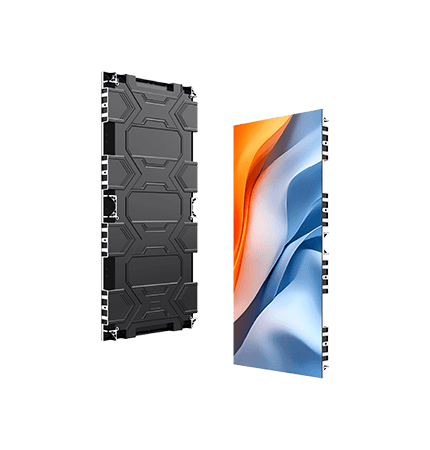
Once the room favors LED, the actual panel matters. YES TECH identifies MG10 Series as an indoor rental LED series, with official materials listing 1.9/2.6 mm pixel pitch, 500 × 500 × 71 mm cabinets, and indoor operating environment.
For teams comparing an indoor led video wall rental, those specifications help frame questions about closest viewer distance, cabinet count, wall size, and setup method. Manufacturer-stated MG10 materials also reference 7680 Hz refresh rate and 18-bit grayscale IC, useful for camera-facing planning.
Panel fit decides LED value because cabinet size, pitch, mounting, processing, accessories, and spare-module planning affect both image quality and build practicality.
Limitation: YES TECH manufacturer specifications do not replace confirmed rental inventory, local crew support, or an event-specific engineering plan.
Watch for: Confirm the exact panel model, processor, signal format, rigging or ground support, spare modules, and technician coverage.
#3 Viewing Distance, Pixel Pitch, and Screen Size | Best for Readability and Budget Control
Pixel pitch directly affects pixel density and recommended viewing distance. A finer pitch can support closer viewing, but it usually raises cost, so the smallest number is not always the smartest rental choice.
Modular LED can scale to custom dimensions, while projection can deliver a large image efficiently in suitable rooms. This ranks third because it connects technical specs to what the audience can actually read.
Closest seats set the pitch for slide text, IMAG, sponsor loops, scenic graphics, and executive presentations.
Limitation: Overspecifying LED pitch can consume budget that might be better used on screen size, labor, cameras, or rehearsal.
Watch for: Send seating charts, screen dimensions, content type, and desired aspect ratio with every quote request.
#4 Rental Scope, Labor, and Venue Logistics | Best for Comparing Real Quote Value
A useful comparison is not panel cost versus projector cost. It is the installed and operated system, including processing, rigging or ground support, power distribution, cabling, delivery, build, show operation, and strike.
Cost drivers can include screen size, resolution, rental duration, setup, delivery, labor, transportation, and overtime assumptions. This ranks fourth because the lowest quote can lose value if it excludes show-critical services.
Quote the complete system before comparing LED and projection prices.
Limitation: A projection package may be simpler and less costly when throw distance, lighting, room layout, and content all support it.
Watch for: Confirm dock access, freight elevator limits, ceiling height, union rules, power drops, cable paths, and insurance requirements.
#5 Content, Cameras, and Show Risk | Best for Live Events and Hybrid Production
Production workflow becomes decisive when the screen appears on camera or carries sponsor deliverables. Indoor LED walls are commonly used for presentations, IMAG, live camera feeds, video playback, motion graphics, awards, product launches, trade shows, and branding.
Refresh rate, processor setup, playback format, scaler choice, live switching, and operator coverage can determine whether the image looks clean in the room and online. This ranks fifth because it matters most after the venue and hardware basics are settled.
Workflow reduces show risk when the screen is central to the live experience.
Limitation: A simple slide-only meeting in a dark room may not need added LED production scope.
Watch for: Schedule content testing, camera checks, cue rehearsal, and signal-path verification before doors open.
Frequently Asked Questions
Is an indoor LED video wall rental always better than projection?
No. LED often fits bright rooms, camera-heavy events, modular stage designs, and high-impact branding. Projection may fit controlled-light rooms, simpler presentations, and tighter budgets.
Compare lighting, viewing distance, content, logistics, and total installed cost before choosing.
What should US venues provide before requesting a display quote?
Provide event date, city, room name, audience size, screen dimensions, content type, run-of-show, and camera needs. Include the floor plan, venue tech packet, load-in schedule, dock access, power, rigging rules, ceiling height, and labor requirements.
How should planners use pixel pitch when comparing LED with projection?
Start with closest viewing distance and content detail. Finer pitch supports closer viewing but usually increases cost.
Compare LED pixel pitch with projector resolution, screen size, throw distance, screen gain, and room lighting.
Conclusion: Match the Display Choice to the Room, Content, and Show Risk
Choose LED rental or projection by venue conditions, not habit. Lighting, panel specs, viewing distance, logistics, and production workflow should drive the decision.
These rankings are planning priorities, not universal rules. Request itemized LED and projection quotes using the same room layout, content brief, and show schedule. Planners evaluating display options can review YES TECH LED display solutions and confirm rental suitability with their provider.
