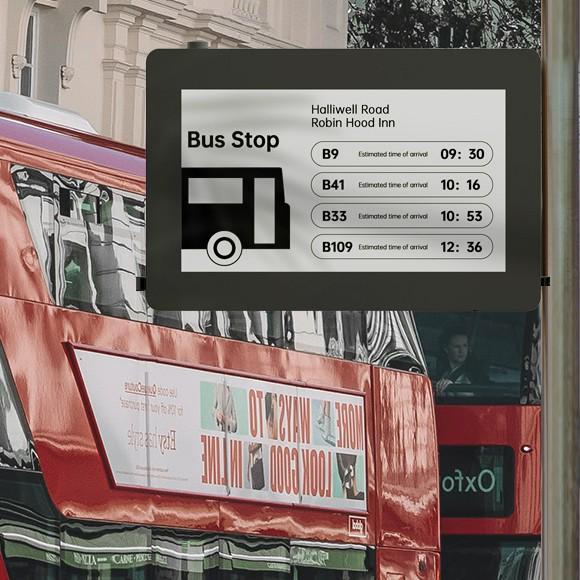
Small e-ink screens are useful for compact labels and portable devices, but some information needs more space. A larger display can show fuller layouts, wider diagrams, and messages that are easier to read from a distance.
A 13.3in epaper display module can be more suitable than a small screen when a project requires room for schedules, menus, instructions, dashboard-style content, or long descriptive labels. One of the most direct benefit of a larger screen is layout freedom. A 13.3inch e ink display can place headings, body text, icons, and simple graphics in a clearer arrangement.
On a small e-ink screen, designers want shorten words, reduce detail, or split content across multiple pages. For signage and information panels, that extra space can improve comprehension. A visitor can read a room schedule, a product label, or a museum note without pressing close to the display.
The screen can hold a complete message instead of a fragment that requires additional explanation elsewhere. Larger size also helps when several viewers need to read the same content. A small badge or tag is personal; a wider display can serve a shared space. This distinction is important when choosing between a compact e-paper component and a module intended for public-facing information.
When Larger Screens Are More Effective
A larger e-paper screen also helps avoid over-compression. Small displays often require abbreviated labels, narrow line lengths, or simplified graphics. When the same information moves to a larger surface, designers can keep wording more natural and reduce the chance that viewers misunderstand a label or instruction. The comparison with small screens should therefore be practical rather than absolute.
Small e-ink displays remain useful for tags, badges, and compact devices. Larger screens are better when readability, layout space, and shared viewing carry more weight than pocket-size construction. A 13.3in epaper display module can support room signs, desk displays, retail information, public notices, and other content that benefits from a stable page-like surface.
Compared with smaller screens, a large e-paper display can reduce the need for constant paging. The user can show several lines of text, a simple table, or a combination of text and image at once. This is especially useful when the information should be understood quickly by people passing through a space.
A larger display changes the role of the device from personal reference to shared communication. It can become part of a wall, counter, kiosk, or meeting area where information must be available without requiring someone to open an app.
Layout, Shared Viewing, and Integration
A small screen may work well when one person holds the device, but public information always are read by several people in the same area. The 13.3-inch format gives the message more presence without depending on the brightness of a typical electronic panel.
Designers can use headings, spacing, and short supporting lines instead of reducing every message to a tight label. This makes the display easier to understand in shared spaces where viewers may not have time to study a small screen closely. A 13.3inch e ink display should be selected when the content plan justifies the extra physical area.
Designers need to consider viewing distance, mounting position, update frequency, and power requirements. Large e-paper works well for information that changes occasionally but remains relevant for long periods. The 13.3-inch product also gives developers a module format that can be integrated into custom display systems.
A 13.3in epaper display module may require more enclosure planning than a small screen, but it also gives the final product more space for meaningful content and cleaner layout design.
If information changes many times each minute, e-paper may not be the right choice. A large screen can look clean with fewer pages and less scrolling, but it still requires careful spacing.
Scene-Optimized Large Displays Delivering Superior Shared Viewing Experience
13.3-inch large e-paper panels offer unrivaled layout freedom and long-distance readability for shared public information display compared with tiny screens. Having long focused on segmented large-format e-paper technology research, SEEKINK accurately balances resolution, power consumption and installation adaptability in its medium-large modules. They delivers cost-effective integrated display solutions for shared signage scenes with rigorous product iteration and scene-oriented optimization.
